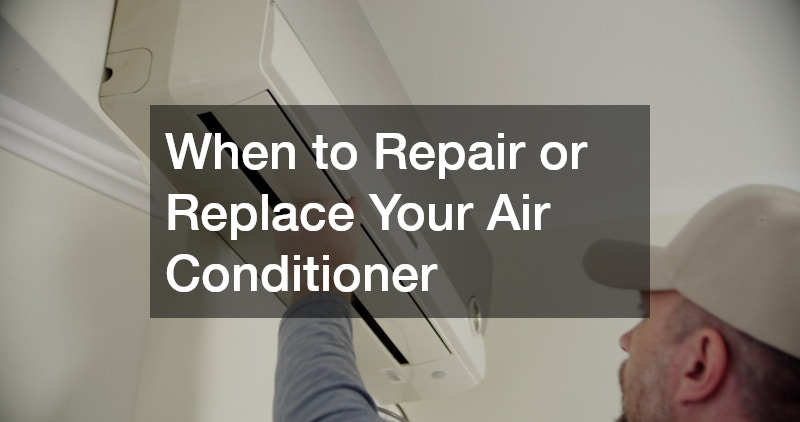
The middle of a scorching heatwave is the absolute worst time for a cooling system to fail. When warm airflow suddenly starts blowing from the supply vents or an unsettling screeching noise echoes from the outdoor condenser, homeowners are immediately thrust into a high-stakes decision-making process. The indoor temperature rises rapidly, bringing discomfort, humidity, and an overwhelming sense of urgency. In these stressful moments, deciding whether to call for a quick mechanical fix or invest thousands of dollars in a brand-new mechanical setup can feel like a complete gamble.
This dilemma pits immediate, short-term relief against long-term financial strategy. Patching up an older cooling system might seem like the budget-friendly path today, but if that system breaks down again next month or continues to consume astronomical amounts of electricity, those temporary savings evaporate. On the flip side, purchasing a whole new system requires a significant upfront financial commitment that many household budgets are not immediately prepared to absorb without careful deliberation.
Navigating this critical crossroads requires a clear, objective framework rather than an emotional snap decision made while sweating in your own living room. By evaluating key parameters such as the exact age of your current machinery, the cumulative pattern of past mechanical issues, current operational efficiency, and overall seasonal utility trends, you can make a confident choice that protects both your family comfort and your financial health.
Calculate Long-Term Costs
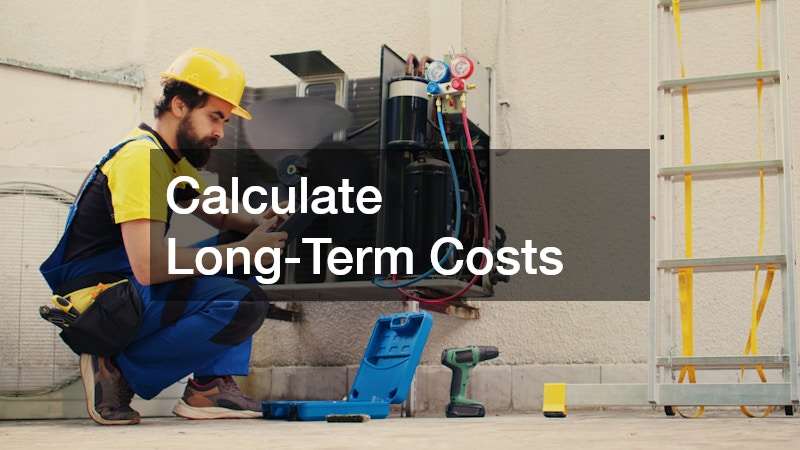
When evaluating whether an aging cooling unit is worth saving, industry experts frequently rely on a simple benchmark known as the $5,000 rule. To apply this mathematical guideline to your specific situation, take the overall age of your outdoor condenser in years and multiply it directly by the total price estimate given for your current air conditioner repairs. If the calculated result exceeds $5,000, standard industry wisdom strongly suggests that investing in a total system upgrade is far more economically sound than sinking additional capital into temporary fixes. For instance, paying $600 to repair a five-year-old system yields a product of $3,000, indicating that keeping the unit is a safe bet. Conversely, a $700 fix on an eleven-year-old unit results in $7,700, tipping the balance decisively toward equipment retirement.
Beyond simple mathematical formulas, the specific internal component that has failed plays a critical role in your decision. Major core components, such as the compressor or the primary evaporator coil, represent the functional heart of the machinery. When these primary elements suffer severe mechanical failures or deep internal burnout after a decade of continuous seasonal service, a full hvac replacement is almost always the smarter financial maneuver. Attempting to swap out a burnt compressor on an old unit is akin to putting a brand-new engine inside a car with two hundred thousand miles on the odometer; the surrounding legacy components, including the fan motor, electrical contactors, and capacitors, remain highly vulnerable to imminent failure.
Finally, always review the fine print of your existing manufacturer warranty documentation before authorizing any major work. Most major equipment manufacturers offer functional part coverage lasting between five and ten years, provided the original owner registered the unit properly upon initial installation. If your equipment remains covered under its factory warranty, key replacement parts may be supplied at zero cost, making localized fixes significantly cheaper. However, if your coverage period has officially lapsed and you are facing out-of-pocket bills for both expensive proprietary components and heavy labor fees, putting those financial resources toward modern, fully warranted equipment offers far superior peace of mind.
Track Energy Spikes and Persistent Operational Glitches
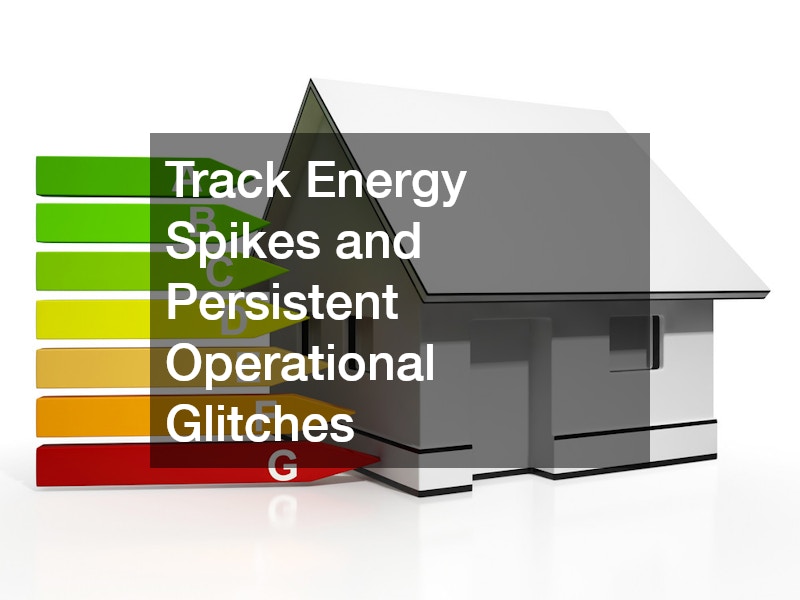
A sudden, unexplained jump in your monthly electricity statement is often the very first warning sign that an internal cooling unit is reaching the end of its useful lifespan. While utility rates can fluctuate slightly from year to year, a steady, dramatic spike during peak cooling months usually indicates that internal mechanical components are friction-bound, clogged, or struggling to complete basic refrigeration cycles. As internal parts wear down, the electric motor must work twice as hard and run significantly longer just to achieve the temperature setting programmed into your wall thermostat. Tracking these monthly financial trends offers clear, empirical proof of declining air conditioning efficiency long before a complete system shutdown occurs.
Operational glitches rarely happen overnight; instead, they manifest as subtle, recurring performance issues that degrade your overall home comfort. Short-cycling, a common condition where the compressor starts up, runs for a brief two or three minutes, and abruptly shuts down before cooling the home, places immense stress on electrical contacts and draws massive surge currents. Similarly, if your home suffers from stubborn indoor humidity that leaves the air feeling heavy and sticky despite continuous operation, the system is failing to extract moisture properly. These persistent operational patterns signal deep-seated system imbalances that basic residential hvac service may no longer be able to permanently resolve.
Physical signs of distress throughout your living spaces also demand careful attention. Hot spots in second-floor bedrooms, weak airflow coming from floor registers, and strange buzzing, grinding, or rattling noises echoing through ductwork all point toward structural degradation. When your cooling equipment struggles to maintain a uniform temperature across every room, it forces you to lower the thermostat repeatedly, compounding the mechanical wear. Recognizing these combined operational red flags allows you to intervene before a minor comfort complaint escalates into a catastrophic midsummer equipment failure.
Schedule Professional Diagnostics Before Making a Final Call
Making a multi-thousand-dollar decision regarding your home comfort should never rely on guesswork or superficial surface checks. Scheduling a thorough, professional hvac inspection gives you an objective, data-driven window into the true internal health of your equipment. A certified technician uses specialized tools to perform static pressure tests across your duct network, check exact electrical amperage draws against factory standards, measure refrigerant subcooling levels, and inspect heat exchangers or electrical banks for micro-cracks and corrosion. These precise technical measurements reveal whether your unit is simply suffering from a minor, easily fixable issue like a faulty capacitor or if it is undergoing systemic operational failure.
Reviewing your historic maintenance records provides another crucial layer of insight when deciding the fate of your cooling system. Take a close look at your accumulated receipts for air conditioning service over the past two to three seasons. If you discover a repeating pattern of service calls—such as topping off refrigerant every spring, replacing fan motors, or changing out burned control boards—you are witnessing cumulative financial drain in real time. Sinking hundreds of dollars into an old system year after year creates an illusion of affordability, whereas aggregating those receipts often reveals that you have already spent a substantial portion of what a modern, highly reliable system would cost.
Crucially, diagnostic visits prioritize family safety by identifying hidden hazards that the average homeowner cannot detect. Aging units frequently develop subtle electrical arc hazards, degraded wiring insulation, or tiny refrigerant leaks that release chemical vapors into your indoor living environment. Refrigerant leaks in particular diminish cooling capacity while forcing the compressor to overheat, rapidly accelerating internal destruction. Identifying these severe safety risks and structural flaws early ensures you can act decisively, choosing replacement over risky repairs before a dangerous electrical situation or total system failure occurs.
Compare Long-Term Energy Savings of Modern Cooling Units
Technological advancements over the past decade have transformed residential cooling efficiency, making modern systems vastly superior to those built just ten or fifteen years ago. Seasonal Energy Efficiency Ratio standards, now updated to SEER2 metrics, require modern equipment to operate at much higher performance thresholds. An older cooling unit might carry an outdated rating of 8 or 10 SEER, whereas contemporary base models start at 13.4 SEER2 and premium variable-speed models reach well above 20 SEER2. Upgrading from an old, inefficient system to a modern setup significantly lowers monthly kilowatt-hour consumption, meaning that choosing a high-efficiency ac installation allows the new equipment to gradually pay for itself through drastically reduced utility bills.
Refrigerant regulations represent another powerful financial incentive to modernize your home equipment. Older cooling setups rely heavily on R-22 Freon, an ozone-depleting compound that has been completely phased out of production under international environmental agreements. Because R-22 is no longer manufactured, repairing a leak in an older unit requires sourcing increasingly scarce, recycled refrigerant at astronomical prices per pound. Transitioning to modern, eco-friendly refrigerants through a complete air conditioning replacement permanently eliminates the risk of paying exorbitant chemical top-off fees every time your system encounters a minor pressure leak.
To soften the initial capital outlay of an equipment upgrade, savvy homeowners should take full advantage of available financial incentives. Federal tax credits, regional utility rebates, and seasonal manufacturer promotions can collectively reduce upfront costs by thousands of dollars. Federal programs under clean energy initiatives offer substantial tax credits for high-efficiency heat pumps and air systems, while local electric utilities frequently distribute cash-back incentives for installing energy-reducing equipment. Factoring these immediate financial offsets into your long-term calculations transforms an intimidating price tag into an achievable, value-adding home improvement project.
Vet Local Experts for Proper System Sizing and Quality Guarantees

Selecting the right equipment is only half the equation; finding qualified, trustworthy professionals to handle the installation is equally vital for long-term comfort and efficiency. You should always seek out licensed, insured HVAC contractors who begin their evaluation process with a comprehensive Manual J load calculation rather than relying on crude rule-of-thumb estimates based solely on square footage. A proper Manual J assessment accounts for local climate data, window orientation, insulation depth, ceiling heights, and air infiltration rates. Skipping this critical diagnostic step often results in installing an oversized or undersized unit, leading to short-cycling, poor humidity control, and premature mechanical breakdown.
When comparing quotes from different installation teams, look closely at the scope of labor coverage and written performance guarantees offered. A reputable air conditioning company will stand firmly behind its craftsmanship by providing a dedicated labor warranty—typically covering one to two years—alongside standard manufacturer part warranties. Verify that the company employs technicians certified by industry-leading organizations such as NATE (North American Technician Excellence) and carries comprehensive liability insurance to protect your property during construction. Choosing a transparent contractor who provides clear, line-item pricing prevents unexpected fees and ensures your new investment is installed to exact factory specifications.
Finally, ensure your chosen installation team evaluates how the new equipment will interact with your home’s existing infrastructure. Modern high-efficiency systems require precise airflow dynamics; connecting advanced equipment to leaky, uninsulated, or undersized ductwork starves the blower motor, creates severe static pressure resistance, and negates expected energy savings. A thorough contractor will inspect your duct layout, verify return air capacity, and recommend necessary adjustments before setting equipment in place. Ensuring complete compatibility between equipment and distribution channels guarantees quiet operation, balanced indoor temperatures, and maximum operational lifespan.
Weighing Your Options for Lasting Home Comfort

Deciding whether to patch up an aging cooling unit or invest in a brand-new system ultimately comes down to balancing immediate financial constraints against long-term peace of mind, energy efficiency, and home comfort. While a quick repair can provide crucial relief during a blistering heatwave, repeatedly fixing an exhausted, inefficient machine quickly turns into a financial trap that yields diminishing returns. By applying structured guidelines like the $5,000 rule, tracking subtle shifts in your monthly utility statements, and monitoring persistent comfort issues like hot spots and high indoor humidity, you can strip the emotion out of the decision and see the clearest financial path forward.
Working alongside certified cooling professionals brings valuable diagnostic clarity to this process. Comprehensive professional testing, thorough duct evaluations, and detailed load calculations ensure you never have to guess about the true mechanical health of your system or the exact capacity your home requires. Whether you choose to extend the operational life of your current setup through targeted maintenance or upgrade to a modern, high-efficiency cooling system that significantly reduces monthly energy consumption, taking proactive steps today prevents painful emergency breakdowns tomorrow.
Take control of your indoor climate before severe weather creates an unexpected home emergency. Gather your past maintenance records, review your recent energy bills, and schedule a comprehensive diagnostic evaluation with a trusted local professional. Evaluating your options thoughtfully under calm conditions empowers you to secure reliable performance, optimize household efficiency, and keep your family cool and comfortable for years to come.