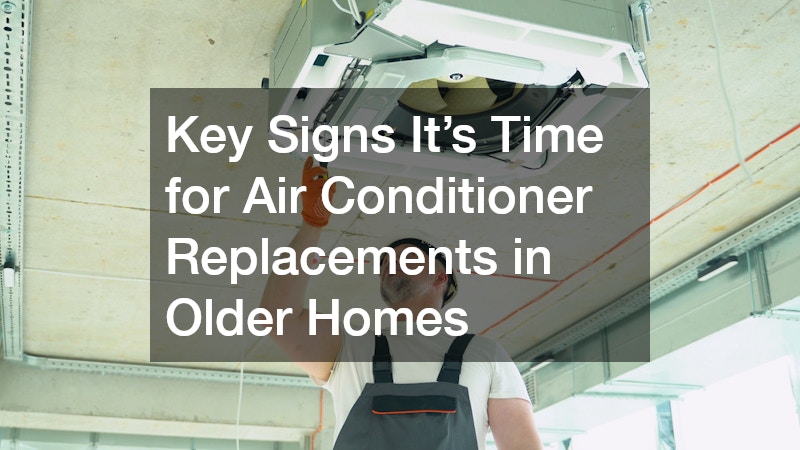
Living in an older home comes with undeniable charm—original woodwork, architectural character, and a unique sense of history. However, older homes also present distinct mechanical challenges, particularly when it comes to climate control. Many vintage properties were constructed long before central cooling was standard, leaving modern HVAC systems to work overtime within poorly insulated framing, drafty windows, or outdated duct networks. As these cooling systems age, performance inevitably degrades, leading to ballooning utility bills, uneven cooling, and persistent breakdown risks. When dealing with historic architecture or houses built before modern insulation standards, planning for timely air conditioner replacements becomes a vital part of property maintenance. Recognizing the early warning signs of a failing unit allows you to upgrade on your own timeline rather than dealing with an emergency breakdown in the dead of summer.
1. Your System Is Past the 10- to 15-Year Mark
The average lifespan of a central cooling unit ranges between 10 and 15 years. In older homes where air distribution is already inefficient due to cramped ductwork or inadequate insulation, air conditioners often work harder and wear out faster than those in newly constructed homes. While proper maintenance can extend the life of a unit, older homes often put extra strain on aging cooling systems, making air conditioner replacements inevitable once a unit crosses the 10- to 15-year mark. Even if a 15-year-old system is still technically running, its internal components have suffered significant wear. Modern systems operate at vastly higher energy efficiency standards, meaning an ancient unit is quietly draining your wallet every minute it runs.
2. Skyrocketing Energy Costs
Have you noticed a steady, unexplained rise in your summer electricity bills over the last few seasons? As air conditioning units age, their mechanical components wear down, motors lose efficiency, and coils collect buildup that hinders heat transfer. In older homes, where heat gain through windows and attics is already high, an inefficient compressor has to run significantly longer cycles to lower interior temperatures. For homeowners keeping an eye on monthly utility bills, modern air conditioner replacements offer a clear path toward significant long-term savings. Upgrading from an outdated unit rated at 10 SEER (Seasonal Energy Efficiency Ratio) to a modern unit rated at 16 SEER2 or higher can reduce your cooling energy consumption by up to 30% to 50%.
3. Frequent and Expensive Repairs
An occasional service call for a minor issue like a dirty filter or a worn capacitor is normal maintenance. However, if you are scheduling multiple service calls every summer to fix leaking coils, failed blower motors, or dying compressors, your system is sending a clear cry for help. A helpful rule of thumb used by HVAC professionals is the “$5,000 Rule”: multiply the age of your equipment by the cost of the requested repair. If the total exceeds $5,000, investing that money into a new system makes far better financial sense than patching up a dying unit. If you find yourself calling a technician multiple times each summer, it is time to compare the cumulative price of fixes against the cost of air conditioner replacements.
4. Inconsistent Temperatures and Excessive Humidity
Older homes are notoriously prone to temperature imbalances, with upper floors trapping heat while lower levels remain chilly. While poor insulation plays a role, a failing or improperly sized air conditioner compounds the problem. As compressors weaken, they lose the capacity to push cold air effectively through existing duct systems. Furthermore, a primary function of an air conditioner is dehumidification. If your home feels uncomfortably sticky, muggy, or drafty despite the AC running continuously, the system is no longer effectively extracting moisture from the air. When evaluating comfort issues across multiple floors, professional air conditioner replacements allow HVAC specialists to re-calculate your home’s actual heat load and match it with variable-speed technology designed to eliminate hot spots and balance humidity.
5. The System Uses Outdated R-22 Refrigerant
If your air conditioner was installed prior to 2010, there is a strong chance it relies on R-22 Freon refrigerant. Due to environmental regulations under the EPA phase-out, R-22 production was completely banned in the United States. Consequently, the cost to recharge a system leaking R-22 has skyrocketed to astronomical levels. Because R-22 is no longer produced or imported in the United States, servicing an older system that uses it becomes prohibitively expensive, driving many homeowners to prioritize air conditioner replacements. Upgrading to a modern unit that utilizes eco-friendly refrigerants like R-410A or R-32 ensures easier servicing, compliance with environmental regulations, and lower long-term maintenance overhead.
Recognizing these red flags early prevents the panic and discomfort of a complete system breakdown during peak summer heat. Upgrading the HVAC equipment in an older property is not merely about replacing an appliance; it is an opportunity to improve overall air quality, enhance energy performance, and protect the structural integrity of your house. Investing in full air conditioner replacements not only lowers operational costs but also restores total comfort to historic and classic residences. If your system is exhibiting any of these warning signs, consult a licensed HVAC professional to evaluate your home and explore modern, high-efficiency options tailored specifically to your space.