A well-run home operates on three fronts at once. Its perimeter, from the ridge and eaves down to the yard and property line, holds back weather, wildlife, and intruders. Its interior depends on safe, capable power and properly sized comfort equipment to support everything from cooking to sleeping. Its lines, both supply and waste, keep clean water arriving and used water leaving without interruption. When all three fronts hold, the household goes about its day without a second thought. When one falters, the problems tend to show up suddenly and in the least convenient moment.
Guarding the perimeter, powering the interior, and keeping every line flowing requires treating the property as a single connected system. Weak spots along the shell or landscape let water and pests reach the structure. Overloaded wiring and poorly balanced equipment waste energy and create safety risks. Neglected pipes and buried tanks fail quietly until they cause damage that is costly to repair. Regular inspections, timely upgrades, and quality workmanship on all three fronts keep the home secure, comfortable, and efficient, giving the household confidence that every system will perform when it is needed most.
Realigning Bent Tracks and Replacing Frayed Lift Cables
Overhead entries form a large, moving section of the perimeter, and their hardware carries tremendous tension. Tracks bent by a bumper, loose brackets, or settling framing cause rollers to bind, making the panel shudder, scrape, or jump out of alignment. Lift cables wrap around drums at the top of the opening, and when their strands fray from rust or wear, they can snap suddenly, dropping one side of the panel. A misaligned or damaged panel no longer seals properly, letting in drafts, water, and pests.
Professional garage door repair begins with securing the panel and releasing tension safely, then inspecting tracks, rollers, hinges, cables, drums, and springs. Bent track sections are straightened or replaced, and brackets are tightened or reinforced so tracks stay plumb and parallel. Frayed lift cables are replaced in pairs and wound evenly onto the drums so the panel stays level as it travels. Worn rollers are upgraded to sealed-bearing nylon, perimeter seals are renewed, and balance, safety sensors, and auto-reverse settings are tested before the opener is reconnected.
Sizing Matched Equipment and Balancing Uneven Airflow
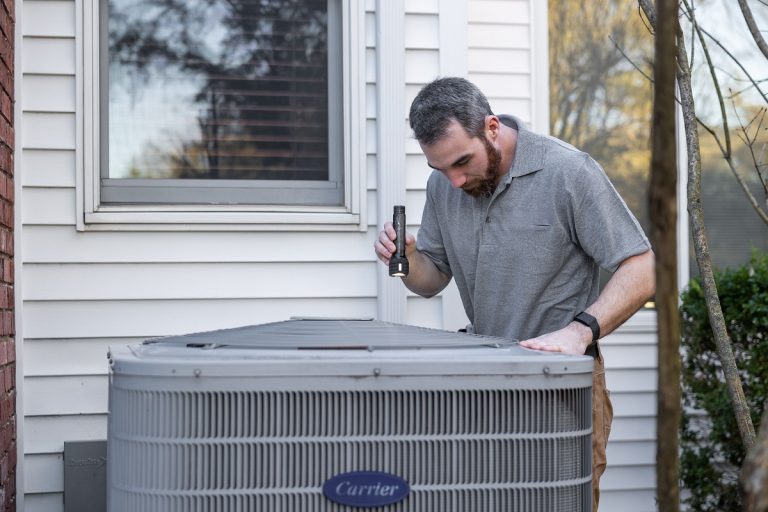
Indoor comfort depends on equipment that matches the home’s actual heating and cooling loads and a duct system that delivers air evenly. Oversized units short-cycle, wasting energy and leaving rooms clammy because they shut off before removing enough humidity. Undersized units run nonstop and still fall behind in extreme weather. Rooms at the end of long duct runs receive too little air, while rooms near the air handler overcool or overheat, and leaky joints dump conditioned air into attics and crawlspaces.
Experienced HVAC companies begin with a Manual J load calculation that accounts for insulation, window performance, air leakage, and orientation, then select AHRI-matched indoor and outdoor components sized to the result. Ducts are tested for leakage and airflow is measured at each register. Joints, seams, and boot connections are sealed with mastic or UL-181 foil tape, undersized returns are enlarged or supplemented with transfer grilles, and balancing dampers are adjusted so every room receives its designed airflow. Static pressure readings confirm the blower is no longer straining against restrictive ductwork.
Tracing Hidden Leaks and Replacing Seized Shutoff Valves
Water supply lines run through walls, floors, and slabs, and their failures often stay hidden until damage is extensive. Pinhole leaks in copper, loose fittings, and corroded galvanized pipe soak framing and subfloors, feed mold, and raise water bills. Meanwhile, older multi-turn shutoff valves under sinks and toilets and at the main supply corrode and seize from mineral buildup. When a leak finally appears, these valves may not close at all, turning a minor problem into a flooded room.
A dependable local plumber traces hidden leaks with acoustic listening equipment, thermal imaging, and isolation pressure tests that pinpoint the failure before walls or floors are opened. Damaged sections are replaced with PEX-A tubing and cold-expansion fittings or Type L copper. Seized valves are replaced with quarter-turn ball valves and braided stainless steel connectors, and the main shutoff is upgraded where needed. A pressure-reducing valve and a smart leak detector with automatic shutoff add further protection against future water damage.
Upgrading Undersized Panels and Adding Dedicated Circuits

Electrical service designed decades ago often cannot support modern appliances, home offices, and vehicle chargers. Older 60- or 100-amp panels fill quickly, forcing new loads onto existing circuits that trip frequently, overheat conductors, and stress connections. Warning signs include warm outlet covers, flickering lights, buzzing breakers, and scorched receptacles. Extension cords and power strips used to work around limited circuits add fire risk throughout the home.
A licensed electrician begins with a load calculation and thermal imaging scan of the panel to identify overloaded circuits and hot connections. Undersized panels are replaced with modern breaker panels, often upgraded to 200 amps with a new meter base, and circuits are rebalanced to distribute loads evenly. New dedicated lines are added for kitchen appliances, laundry, heating and cooling equipment, workshops, and vehicle chargers. AFCI and GFCI protection is installed where required, and a whole-home surge protector shields sensitive electronics.
Pumping Full Tanks and Restoring Saturated Drainfields
Buried wastewater systems keep the lines flowing away from the house, but they depend on regular maintenance. When a tank goes too long between pumpings, sludge and scum fill the tank and solids escape into the drainfield. These solids clog soil pores and form a biomat that slows absorption until effluent pools on the surface. Saturated fields cause slow drains, foul odors, soggy patches, and eventually sewage backups into the house.
A reliable local septic system service begins by pumping the tank completely, measuring sludge levels, and inspecting baffles, effluent filters, and the distribution box. Corroded baffles are replaced with PVC sanitary tees, and filters are cleaned or replaced. Saturated fields may be rested while flow is diverted to an alternate zone, and soil fracturing with compressed air can relieve compaction and break up the biomat. Distribution boxes are leveled, damaged lines are replaced, and surface water is diverted away from the field. Risers bring the access lids to grade so future pumping is quick and inexpensive.
Resealing Worn Flashing and Replacing Storm-Damaged Shingles
The upper perimeter takes direct hits from wind, hail, and debris. Hail fractures the mat beneath the granules, wind lifts tabs and breaks their adhesive bonds, and falling branches puncture the surface. Flashing at chimneys, sidewalls, skylights, and vents often fails first, as sealant dries out and metal pulls away from adjoining surfaces. Water entering at these points soaks decking and insulation, rots framing, and eventually stains ceilings below.
Experienced local roofers inspect the surface after major storms, documenting damaged shingles and checking every penetration and transition. Fractured, creased, or missing shingles are replaced with matching material fastened with ring-shank nails and sealed in high-wind areas. Worn flashing is removed, step flashing is woven course by course along sidewalls, chimney counterflashing is set into reglets cut into mortar joints, and pipe boots are replaced. Self-adhered membrane is applied around penetrations, and damaged decking is replaced before shingles are reinstalled. Attic ventilation is checked during the same visit so the deck stays dry between storms.
Thinning Crowded Canopies and Clearing Hazardous Limbs

Mature canopies shade the home and frame the landscape, but crowded crowns catch more wind and become more likely to break during storms. Dense shade keeps shingles damp, encouraging moss and algae, while thinning turf and shrubs below. Limbs reaching over the house scrape siding and drop debris into drainage channels, and they give squirrels and rodents a direct bridge onto the eaves. Dead or cracked limbs can fall without warning onto people, vehicles, or the structure.
Professional tree services follow ANSI A300 pruning standards, making clean cuts just outside the branch collar so wounds close naturally. Crown thinning removes selected interior limbs, typically no more than about a quarter of the living canopy at once, allowing wind and sunlight to pass through. Hazardous limbs are rigged and lowered with ropes rather than dropped, and branches are pruned back to maintain several feet of clearance from the house. Debris is chipped and removed, and dormant-season scheduling reduces stress for many species.
Designing Backyard Retreats and Engineering Reinforced Shells
A backyard swim area can become the heart of outdoor living, but it must be designed for the site and built to resist the forces acting on it. Poor placement leads to constant leaf debris, cold water, and runoff entering the basin. Below grade, expansive clay, high groundwater, and poorly compacted backfill press against the shell, and inadequate reinforcement allows cracks that leak continuously and wash away supporting soil, damaging decks and nearby structures.
An experienced custom pool builder begins with a site survey, soil report, and design that considers sun exposure, drainage, privacy, setbacks, and how the space connects to the house. Engineered plans specify shell thickness and steel reinforcement, and crews tie rebar in a tight grid before applying concrete pneumatically and curing it slowly for full strength. Plumbing is pressure-tested before backfill, hydrostatic relief valves protect against groundwater pressure, and an equipotential bonding grid ensures electrical safety. Barriers and alarms complete a safe, welcoming retreat.
Setting Frost-Proof Posts and Hanging Weather-Resistant Panels
The outer edge of the perimeter defines the property, provides privacy, and keeps children and pets safely contained. Posts set too shallow are pushed upward each winter as water in the soil freezes and expands, while posts buried in plain dirt or trapped in concrete collars rot at grade. Solid panels catch wind like sails, magnifying every weakness, and panels made from untreated wood warp, split, and fade. Once posts lean, rails twist, gaps open, and gates stop latching.
Professional fence installation begins with locating utilities and marking the layout, then digging post holes below the frost line and at least one-third of the post length. Gravel at the base improves drainage, and each post is set in concrete crowned to shed water, then plumbed and braced while it cures. Weather-resistant panels of cedar, vinyl, composite, or powder-coated aluminum are attached with stainless steel or hot-dip galvanized fasteners, and gates are hung with heavy-duty hinges, anti-sag hardware, and self-latching mechanisms where needed.
Sealing Foundation Gaps and Treating Hidden Nesting Sites
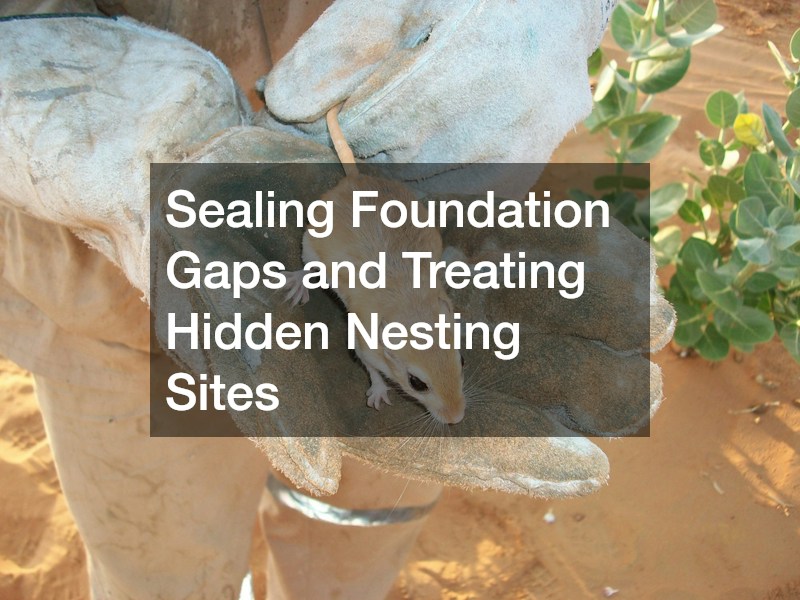
The point where the house meets the ground is the main gateway for insects and rodents. Cracks in foundation walls, gaps around utility penetrations, torn vent screens, and worn door sweeps provide easy access, while mulch piled against siding gives insects a sheltered pathway into wall cavities. Once inside, rodents nest in attics and crawlspaces, chewing wiring and contaminating insulation, while ants, roaches, and termites spread quietly through voids and framing.
Effective pest control begins with a full inspection of the foundation, crawlspace, attic, and utility penetrations, tracing droppings, trails, and moisture readings back to their sources. Gaps are sealed with copper mesh, hardware cloth, metal flashing, and durable sealants, and damaged vent screens and door sweeps are replaced. Hidden nesting sites are treated with targeted baits, dusts, and growth regulators placed directly in voids and harborages, while a non-repellent perimeter treatment intercepts new arrivals. Moisture corrections and regular monitoring keep activity from returning.
A home performs best when its perimeter, interior, and lines all work together. A sound shell, managed canopies, sturdy enclosures, well-aligned overhead entries, and sealed foundations keep weather, wildlife, and pests outside. Safe electrical service and properly sized, balanced comfort equipment keep the interior powered and comfortable. Reliable supply lines, working shutoffs, and well-maintained wastewater systems keep water moving where it belongs. When any front weakens, the effects spread quickly to the others.
Keeping all three fronts strong requires a consistent routine. Seasonal inspections of shingles, flashing, and the yard, annual mechanical and electrical evaluations, periodic tank pumping, routine checks of moving hardware, and ongoing pest monitoring catch problems while they are still small. Upgrading aging components before they fail prevents emergencies and keeps operating costs predictable.
The reward is a home that stays secure, comfortable, and efficient through every season. Outdoor spaces remain safe and inviting, rooms stay powered and comfortable, and water flows reliably in and out. By guarding the perimeter, powering the interior, and keeping every line flowing, homeowners protect both their property and the daily lives of everyone who lives there.