One of the critical aspects of air conditioning installation that homeowners might overlook is the sizing of the AC unit. Proper sizing ensures that your unit runs efficiently, leading not only to comfortable indoor temperatures but also to lower energy bills. An undersized unit will work harder and longer to cool your home, resulting in potential wear and tear, while an oversized unit might cool too quickly, leading to short cycling and inadequate dehumidification.
The right size depends on several factors including the square footage of your home, the insulation quality, and the local climate. Professionals conduct a Manual J calculation to determine the correct size by evaluating these and other factors like window types and placement.
Utilizing the Manual J approach is crucial because it considers the unique properties of your home, ensuring that the system provides optimum performance and efficiency.
Choosing the correct capacity is especially relevant when replacing an old unit. It might be tempting to assume that similar specifications to your previous AC will suffice. However, improvements in technology and changes in your home’s structure over time necessitate reevaluation. Consulting with an expert before choosing a unit ensures you are making an informed decision that aligns with your current needs and energy goals.
Inspecting Ductwork and Airflow Considerations
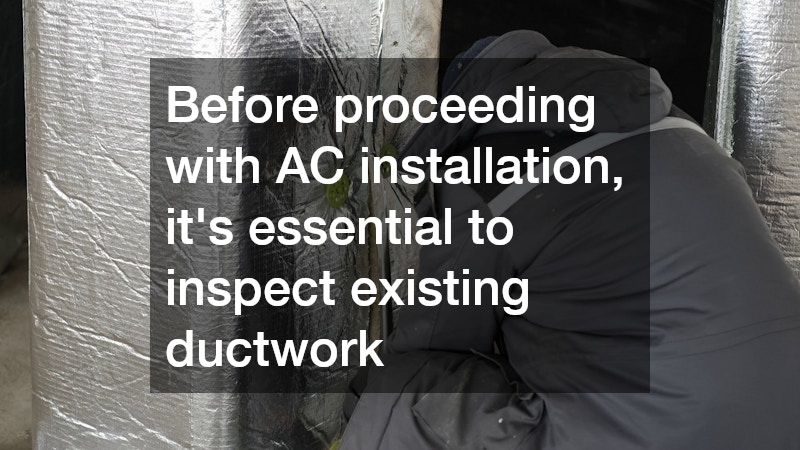
Before proceeding with AC installation, it’s essential to inspect existing ductwork, as this can significantly affect the system’s efficiency and performance. Leaky or outdated ducts can lead to air loss, meaning your system needs to work harder to cool your home, thereby increasing energy costs. Addressing ductwork issues before installation will maximize the benefits of your new air conditioning system and improve overall indoor air quality.
In addition to ensuring ducts are in good condition, consider the design and layout of your duct system. The most efficient system is one that facilitates optimal airflow throughout your home. This might involve adding vents or changing their placement to eliminate hotspots or cold zones, providing a consistently comfortable environment.
Modern HVAC technologies sometimes allow for ductless systems, which can be advantageous in homes without existing ductwork or in rooms that are challenging to properly ventilate. While ductless units are a steeper initial investment, they offer flexibility and often result in energy savings over time due to their efficiency. Discussing these options with your installation professional can help you decide the best path forward for your specific needs.
Choosing the Right SEER Rating for Efficiency
The Seasonal Energy Efficiency Ratio (SEER) is a metric that indicates how efficient an air conditioning system is throughout an average cooling season. A higher SEER rating generally means greater energy efficiency, potentially leading to lower utility costs. It’s important for homeowners to balance initial costs with long-term savings when selecting a system with the appropriate SEER rating.
While SEER ratings currently range from 13 to 25, choosing an extremely high SEER might not be the best option if your region doesn’t require heavy air conditioning use. Areas with milder climates could see sufficient efficiency from systems with a moderate SEER rating, yielding acceptable savings without excessive upfront costs. However, in hotter regions, investing in a higher SEER system can yield significant reductions in cooling costs over time.
The U.S. Department of Energy has established minimum SEER requirements that continue to evolve, reflecting advancements in technology and manufacturing standards. Remaining informed about these changes can aid in making a decision that not only makes financial sense but also supports energy efficiency and environmental goals. Consulting with seasoned HVAC professionals will provide further insight into how SEER ratings correlate with real-world performance in your climate zone.
Tackling Installation Costs and Budgeting
AC installation costs can vary widely based on the type and size of the unit, the complexity of the installation, and additional features or modifications. It’s essential to prepare a budget that covers not only the system itself but also any necessary home assessments, customization, and subsequent maintenance. Unexpected costs can arise if your property’s electrical system requires upgrades or if significant ductwork changes are needed.
Understanding the total cost involves more than just the purchase price; consider potential rebates and tax incentives available for energy-efficient models. These savings can offset initial expenses, making high-efficiency units more appealing from a financial standpoint. Furthermore, the reduced operational costs over the life of a high-efficiency system often prove financially beneficial in the long term.
It’s advisable to obtain multiple quotes from reputable HVAC contractors to ensure competitive pricing and a comprehensive service understanding. Transparent quotes that detail material, labor, and additional fees help avoid hidden costs and complications. Proper contractor evaluations and clear communication can lead to a smooth installation process that aligns with your budget and comfort goals.